Institute for Justice Reform & Innovation
Drake Law’s Institute for Justice Reform and Innovation promotes justice through research, education, and action, connecting law with the humanities and social sciences.
Institute for Justice Reform & Innovation
Mission Statement
The Institute for Justice Reform and Innovation (IJRI) promotes justice in the courts and the legal profession through scholarship and action that connect law to the humanities and social sciences. By adopting the norm of justice, not the rule of law alone, the IJRI seeks to increase the legitimacy of the judicial system and the profession, so that they may warrant public trust.
Trial by Agreement
Trial by Agreement is one of the most significant innovations in decades for the civil justice systems in state and federal courts. Information and education about Trial by Agreement is an important goal of the Institute.
While a series of recent amendments to the Federal Rules of Civil Procedure create unintended consequences of increasing cost and delay, Trial by Agreement—created and developed by Texas trial lawyers Steve Susman and Thomas Melsheimer—achieves the opposite result. It is such a crucial innovation; Judge Mark W. Bennett has incorporated it into his supplemental trial management order entered early in every civil case. Lawyers in all filed civil cases are required to read about Trial by Agreement, discuss it with their clients, and file an affidavit to that effect.
Judges are encouraged to follow Bennett’s lead, and trial lawyers and litigators are urged to suggest the use of Trial by Agreement in their cases. Bennett’s experience teaches that Trial by Agreement substantially reduces cost and delay in federal civil litigation.
Academic Articles and Resources
See below for a repository of academic articles and other resources relating to civil justice, criminal justice, and both civil and criminal justice.
Civil and Criminal Justice
Use the accordion below to view a repository of academic articles and other resources relating to civil and criminal justice.
Mark W. Bennett, Implicit Racial Bias in Sentencing: The Next Frontier, 126 Yale L. J. F. (2017)
Justin D. Levinson, Mark W. Bennett & Koichi Hioki, Judging Implicit Bias: A National Empirical Study of Judicial Stereotypes Beyond Black and White, 69 Fla. L. Rev. 63 (2017)
Justin D. Levinson & Robert J. Smith, Systemic Implicit Bias, 126 Yale L. J. F. 406 (2017)
Nicole E. Negowetti, Implicit Bias and the Legal Profession’s “Diversity Crisis”: A Call for Self-Reflection, 15 Nev. L. J. 930 (2015)
Robert J. Smith, et al., Implicit White Favoritism in the Criminal Justice System, 66 Ala L. Rev. 871 (2015)
Justin D. Levinson et al., Devaluing Death: An Empirical Study of Implicit Racial Bias on Jury-Eligible Citizens in Six Death Penalty States 87 NYU L. Rev. (2014)
Justin D. Levinson, et al., Innocent until Primed: Mock Jurors’ Racially Biased Response to the Presumption of Innocence, 10 Plos One 1371 (2014)
Implicit Racial Bias Across The Law (Justin D. Levinson & Robert J. Smith eds., 2012)
Justin D. Levinson, SuperBias: The Collision of Implicit Social Cognition and Behavioral Economics 45 Akron L. Rev. 591 (2012)
Justin D. Levinson & Robert J. Smith The Impact of Implicit Racial Bias on the Exercise of Prosecutorial Discretion, 35 Seattle L. Rev. (2012)
Jerry Kang, Mark Bennett, Deven Carbado, Pam Casey, Nilanjana Dasgupta, David Faigman, Rachel Godsil, Anthony G. Greenwald, Justin Levinson & Jennifer Mnookin, Implicit Bias in the Courtroom, 59 UCLA L. Rev. 1124 (2012)
Mark W. Bennett, Unraveling the Gordian Knot of Implicit Bias in Jury Selection: The Problems of Judge-Dominated Voir Dire, the Failed Promise of Batson, and Proposed Solutions, 4 Harv. L. & Pol’y Rev. 149 (2010)
Jerry Kang & Kristin Lane, Seeing Through Colorblindness: Implicit Bias and the Law, 58 UCLA L. Rev. 465 (2010)
Justin D. Levinson & Danielle Young, Different Shades of Bias: Skin Tone, Implicit Racial Bias, and Judgments of Ambiguous Evidence, 112 W. Va. L. Rev. 307 (2010)
Justin D. Levinson, Guilty by Implicit Racial Bias: The Guilty/ Not Guilty Implicit Association Test, 8 Ohio St. J. Crim. L. 187 (2010)
Justin D. Levinson & Danielle Young, Implicit Gender Bias in the Legal Profession: An Empirical Study, 18 Duke J. Gender L. & Pol’y 1 (2010)
Justin D. Levinson, Forgotten Racial Equality: Implicit Bias, Decision-Making and Misremembering, 57 Duke L.J. 345 (2007)
Andrew Scott Baron & Mahzarin R. Banaji, The Development of Implicit Attitudes: Evidence of Race Evaluations from Ages 6 and 10 and Adulthood, 17 Psychol. Sci. 53 (2006)
Anthony G. Greenwald & Mahzarin R. Banaji, Implicit Social Cognition: Attitudes, Self-Esteem, and Stereotypes, 102 Psychol. Rev. 4 (1995)
Colleen F. Shanahan, The Keys to the Kingdom: Judges, Pre-Hearing Procedure, and Access to Justice, 2018 Wis. L. Rev. 215 (2018)
Judge Noelle C. Collings, Life as a U.S. Magistrate Judge, 56 No.2 Judge’s J. 22 (2017)
Stephanie L. Damon-Moore, Trial Judges and the Forensic Science Problem, 92 N.Y.U. L. Rev. 1532 (2017)
Aaron G. McLeod, How to Write So Judges Will Like You, 78 Ala. Law 216 (2017)
Jeffrey J. Rachlinski, Andrew J. Wistrich & Chris Guthrie, Can Judges Make Reliable Numeric Judgments? Distorted Damages and Skewed Sentences, 90 Indiana L.J. 695 (2015)
Andrew J. Wistrich, Jeffrey J. Rachlinski & Chris Guthrie, Heart Versus Head: Do Judges Follow the Law or Follow Their Feelings, 93 Texas L. Rev. 855 (2015)
Chris Guthrie, Jeffrey J. Rachlinski, & Andrew J. Wistrich, Inside the Judicial Mind, 86 Cornell L. Rev. 777 (2001)
Shari Seidman Diamond, Beth Murphy & Mary R. Rose, The “Kettleful of Law” In Real Jury Deliberations: Successes, Failures, and Next Steps, 106 Nw. U. L. Rev. 1537 (2012)
Nancy S. Marder, Bringing Jury Instructions Into the Twenty-First Century, 81 Notre Dame L. Rev. 449 (2006)
Bethany K. Dumas, Jury Trials: Lay Jurors, Pattern Jury Instructions, and Comprehension Issues, 67 Tenn. L. Rev. 701 (2000)
J. Alexander Tanford, Law Reform by the Courts, Legislatures, and Commissions Following Empirical Research on Jury instructions, 25 Law & Soc’y Rev. 155 (1991)
Geoffrey P. Kramer & Dorean M. Koenig, Do Jurors Understand Criminal Jury Instructions? Analyzing the Results of the Michigan Juror Comprehension Project, 23 U. Mich. J. L. Reform 401 (1990)
Robert P. Charrow & Veda R. Charrow, Making Legal Language Understandable: A Psycholinguistic Study of Jury Instructions, 79 Colum. L. Rev. 1306 (1979)
Robert G. Nieland, Assessing the Impact of Pattern Jury Instructions, 62 Judicature 185 (1978)
Robert I. Correales, Is Peña-Rodriguez v. Colorado Just a Drop in the Bucket or a Catalyst For Improving a Jury System Still Plagued By Racial Bias, and Still Badly in Need of Repairs 21 Harv. Latinx L. Rev. 1 (2018)
Jarod S. Gonzalez, The New Batson: Opening the Door of the Jury Deliberation Room After Peña-Rodriguez v. Colorado, 62 St. Louis U. L.J. 397 (2018)
Kathryn E. Miller, The Attorneys Are Bound and the Witnesses Are Gagged: State Limits on Postconviction Investigation in Criminal Cases, 106 Calif. L. Rev. 135 (2018)
Mark W. Bennett, Reinvigorating and Enhancing Jury Trials Through an Overdue Juror Bill of Rights: A Federal Trial Judge’s View, 38 Ariz. St. L. J. 481 (2016)
Mark W. Bennett, The Changing Science on Memory and Demeanor – And What it Means for Trial Judges, 101 Judicature 60 (2017)
Mark W. Bennett, Unspringing the Witness Memory and Demeanor Trap: What Every Judge and Juror Needs to Know About Cognitive Psychology and Witness Credibility, 64 Am. U. L. Rev. 1331 (2015)
John G. Seamon, et al., Did We See Someone Shake Hands with a Fire Hydrant?: Collaborative Recall Affects False Recollections from a Campus Walk, 122 Am. J. Psych. 235 (2009)
Elizabeth Loftus, Maryanne Garry & Harlene Hayne, Repressed and Recovered Memory, Beyond Common Sense: Psychological Science in the Courtroom, (Eugene Borgida & Susan T. Fiske, eds., 2007)
John G. Seamon, Morgan M. Philbin, & Liza G. Harrison, Do You Remember Proposing to the Pepsi Machine? False Recollections From a Campus Walk, 13 Psychonomic Bull. & Rev. 752 (2006)
Gregory L. Ogden, The Role of Demeanor Evidence in Determining Credibility of Witness in Fact Finding: The Views of ALJS, 20 J. Nat’l Ass’n Admin. L. Judges 1 (2000)
Daniel L. Schacter, The Seven Sins of Memory—Insights from Psychology and Neuroscience, 54 Am. Psychologist 182 (1999)
Jeremy A. Blumenthal, A Wipe of the Hands, a Lick of the Lips: The Validity of Demeanor Evidence in Assessing Witness Credibility, 72 Neb. L. Rev. 1157 (1993)
Walter M. Steele, Jr. & Elizabeth G. Thomburg, Jury Instructions: A Persistent Failure to Communicate, 67 N.C.L. Rev. 77 (1988)
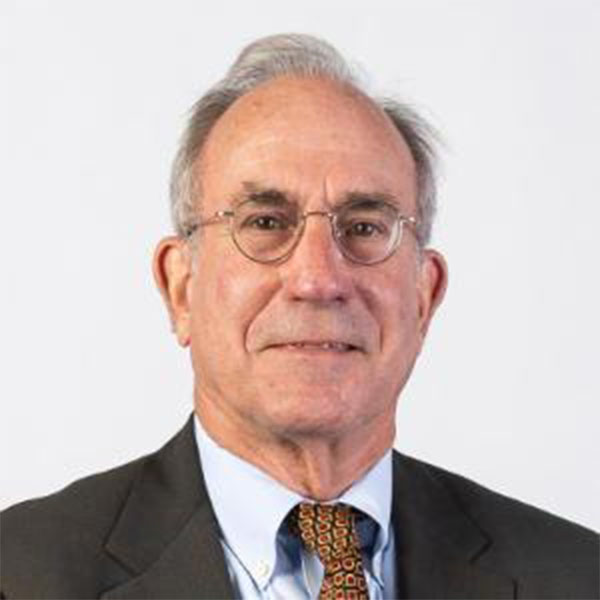
Brent Appel
Instructor of Law; Deputy Director of the Institute for Justice Reform & Innovation
Law School
Phone: 515-271-3685
Email: brent.appel@drake.edu
Office: Cartwright Hall
Dean Strang
Associate Professor of Law; Director of the Institute for Justice Reform & Innovation
Law School
Email: dean.strang@drake.edu
Office: Cartwright Hall